
Corporate Governance
At INALUM, transparent, accountable, and ethical governance forms the foundation of how we conduct our business. By upholding these principles, we strive to ensure that every decision and action reflects our commitment to responsible business practices and long-term sustainability.
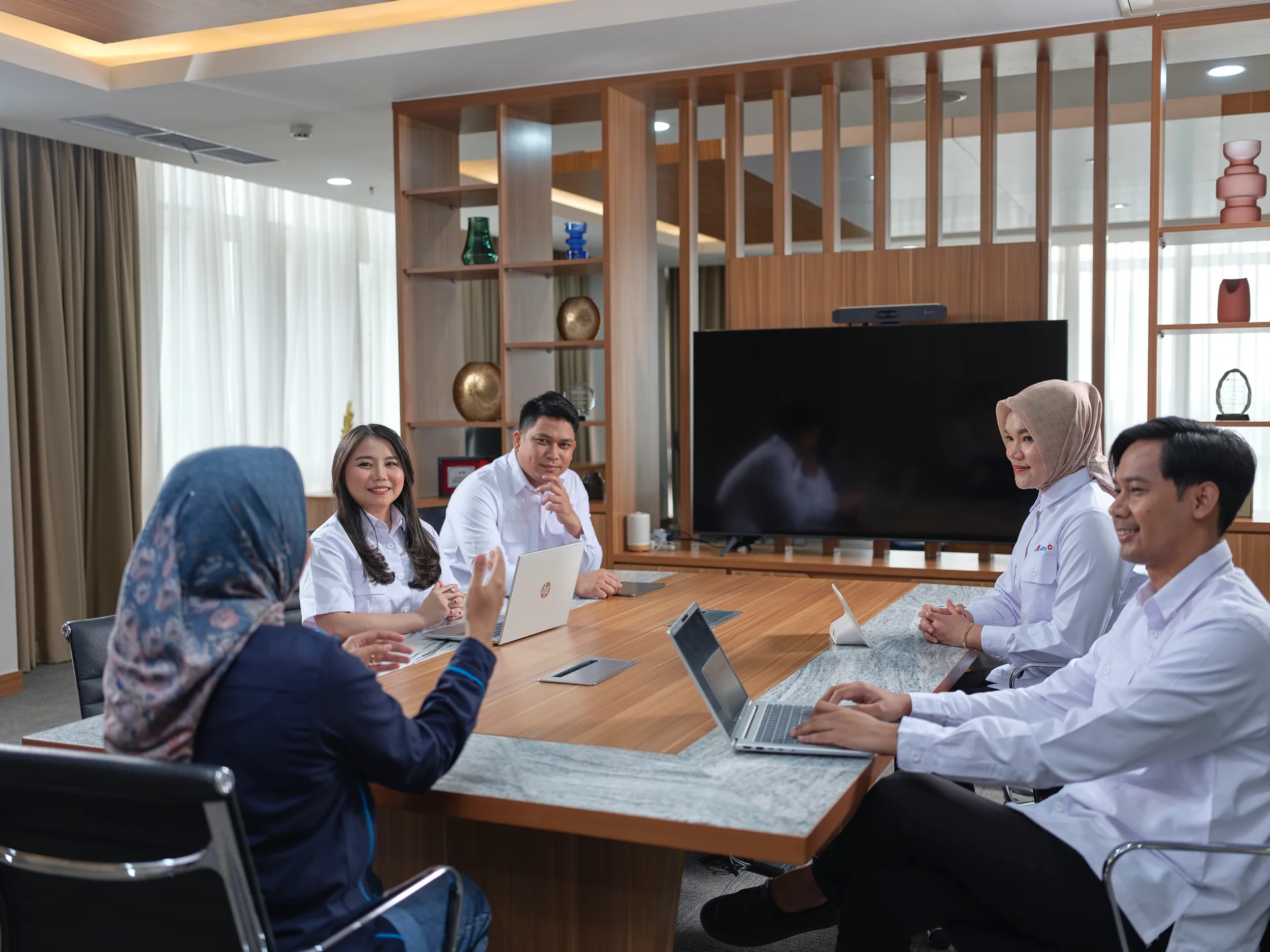
Good Corporate Governance as the Foundation of Sustainability
At INALUM, good corporate governance is more than a regulatory requirement. It is a fundamental part of how we conduct our business responsibly, make decisions, and build lasting trust with our stakeholders. As a State-Owned Enterprise, we uphold the principles of Good Corporate Governance (GCG) in accordance with applicable regulations, including Minister of State-Owned Enterprises Regulation No. PER-01/MBU/2011.
These principles guide our business activities through the Corporate Governance Policy, which serves as a framework for creating long-term corporate value while safeguarding stakeholder interests. By embedding good governance into our corporate culture, INALUM strives to strengthen accountability, uphold integrity, and support the achievement of its vision and mission in a sustainable manner.
Transparency as the Foundation of Trust
We are committed to consistently applying the best practices of governance in all aspects of our business to improve company performance and sustainability in today's highly competitive and dynamic business era. Stakeholders expect ever-better governance, so the Company conducts business based on the principles of transparency, accountability, responsibility, independence, and fairness.
Ethical Practices That Drive Responsible Decision-Making
GCG is a Company necessity to create added value for Shareholders and Stakeholders and to strengthen the Company's competitiveness. The Company has therefore issued GCG Guidelines as a reference for setting and running Company policy, consisting of:
GCG Guidelines (Code of Corporate Governance)
Corporate Code of Conduct
Board of Commissioners Charter
Board of Directors Charter
Other policies covering the Whistleblowing System (WBS), Gratification, the Anti-Bribery Management System, and LHKPN (state officials' wealth report) reporting
In its implementation, the Company has prepared and issued supporting instruments (soft structure), including:
In the decision-making mechanism, the Board of Directors ensures that GCG principles are applied in Board of Directors Meetings. These meetings are held in accordance with applicable laws and regulations and best business practices. In practice, the Board of Directors always ensures that:
The Board of Directors meeting schedule is prepared before the following year begins.
Board of Directors meetings are held at least once a month, in the 2nd week of each month.
Board of Directors meetings may be held at any time if:
a. it is deemed necessary by one or more Directors;
b. upon written request from one or more members of the Board of Commissioners; or
c. upon written request from one or more Shareholders who together represent 1/10 (one-tenth) or more of the total shares with voting rights.
As a form of recognition for the roles, responsibilities, and contributions of the Board of Commissioners and the Board of Directors, the Company provides remuneration/honoraria determined in accordance with applicable laws and regulations. It is expected that the establishment of fair and competitive remuneration/honoraria will encourage accountability and motivation among the members of the Board of Commissioners and the Board of Directors in carrying out their roles within the Company
The granting of remuneration/honoraria must also be linked to performance achievements and KPIs for the relevant year, while taking into account dividend contributions or other indicators set by the Shareholders.
Under the Minister of State-Owned Enterprises Regulation, the Board of Commissioners and the Board of Directors are entitled to receive remuneration/honoraria as part of the agenda for the General Meeting of Shareholders (GMS) to Approve the Annual Report if:
The auditor’s opinion is an Unqualified Opinion (WTP)
The financial health rating is at least BBB
KPI achievement is at least 80%
The condition of the relevant state-owned enterprise has not deteriorated compared to the previous year—for state-owned enterprises that were previously unprofitable but are now profitable, without taking financial controls into account
The Board of Commissioners, through the NRPRGCG Committee, periodically reviews and evaluates the talent system implemented by the Board of Directors. It then validates and calibrates the talent proposed by the Board of Directors to the Board of Commissioners as “selected talent” to produce a list of the Company’s talent, including members of the Board of Directors and the President Director, who will be nominated by the Board of Commissioners to the Shareholders.